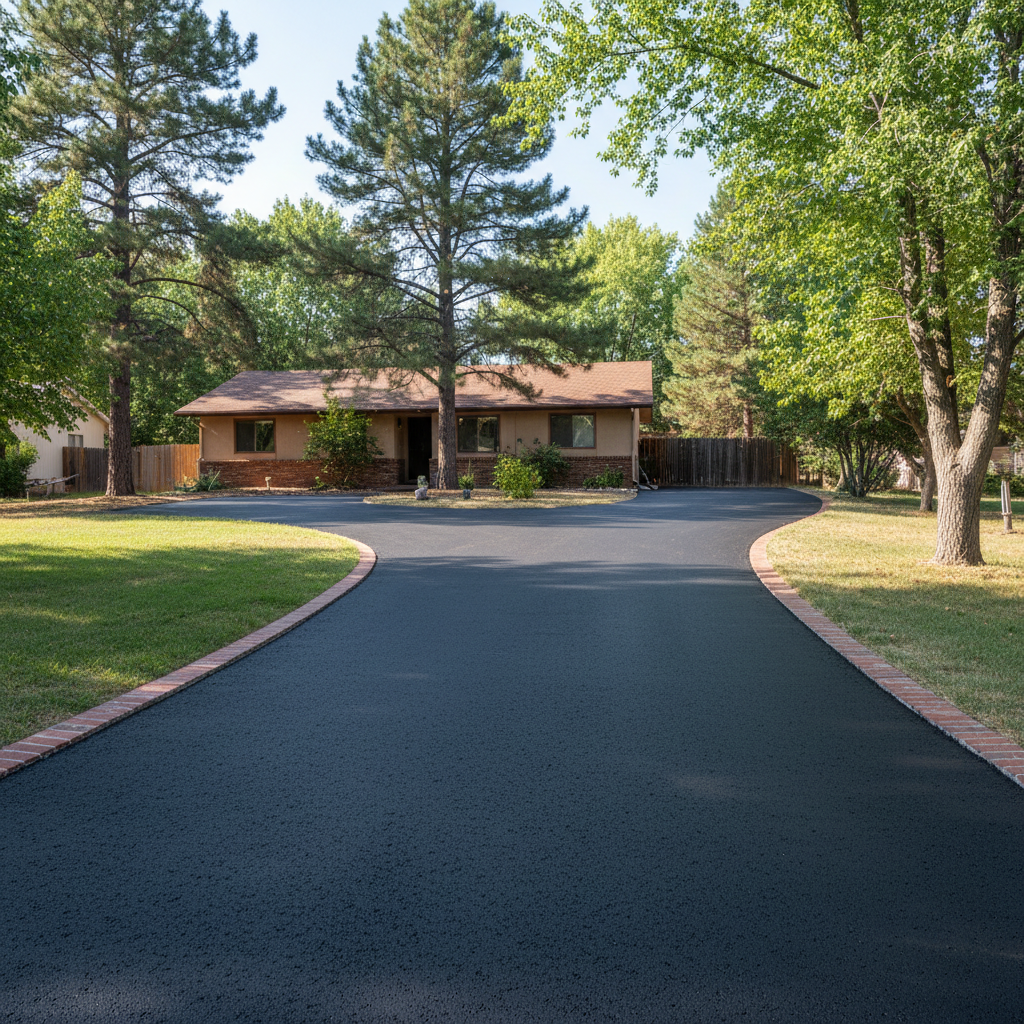
Thinking about a new asphalt driveway, or maybe just fixing up the one you've got? One of the first things folks ask me is, "What's this going to cost me?" And look, I totally get it. Nobody wants a nasty surprise when the bill shows up. While I can't give you an exact number without actually seeing your property, I can definitely give you a pretty good idea of what to expect right here in Flagstaff.
What Makes Asphalt Driveway Costs Go Up or Down?
A few big things really move the needle on price. It's not just about how many square feet you have, though that's obviously a huge part of it.
- Size and Shape: This one's a no-brainer. A bigger driveway means more material, more people working. But also, a really curvy or oddly shaped driveway takes more time and skill to lay out and pave than, say, a simple rectangle.
- Subgrade Condition: This is probably the most overlooked factor, but it's absolutely critical. If your existing base — that's the dirt and gravel underneath — is soft, muddy, or full of roots, we'll have to do more work to get it ready. We see a lot of rocky, volcanic soil around here, especially in spots like Kachina Village or Mountainaire, which can sometimes mean extra effort to get a smooth, stable base. A bad subgrade means your driveway won't last as long, no matter how good the asphalt is.
- Drainage: Water is asphalt's arch-nemesis. If your property has poor drainage, we might need to add culverts, French drains, or grade the driveway in a special way to shed water. This adds to the cost, sure, but it saves you a ton of headaches (and repair bills) down the road.
- Asphalt Thickness: Most residential driveways get 2-3 inches of compacted asphalt. If you've got heavy vehicles or just want a super durable surface, you might go for 4 inches, which naturally costs more.
- Accessibility: Can our big trucks and equipment easily get to your driveway? Or is it tucked away down a narrow lane or on a steep slope? Tough access means more time and labor for us.
- Existing Driveway Removal: If you're replacing an old asphalt or concrete driveway, we have to factor in the cost of breaking it up, hauling it away, and getting rid of it. This can be a pretty significant chunk of the total bill.
Typical Cost Ranges in Flagstaff
Alright, let's talk actual numbers. For a standard residential asphalt driveway in Flagstaff, you're generally looking at:
- New Installation (full depth, good subgrade): Expect to pay anywhere from $4.50 to $8.00 per square foot. This includes proper grading, a good gravel base, and 2-3 inches of compacted asphalt. For a typical 1,000 sq ft driveway, that's $4,500 to $8,000.
- Asphalt Overlay (paving over existing asphalt): If your existing asphalt is in decent shape but just needs a fresh surface, an overlay can run you $2.50 to $4.00 per square foot. This is cheaper because we don't do as much base work.
- Driveway Removal and Replacement: If we have to rip out an old driveway, add another $1.50 to $3.00 per square foot on top of the new installation cost for the demolition and disposal.
Remember, these are just rough estimates. A small, simple patch job will be less, and a huge, complex commercial-grade driveway will be more. Always get a detailed quote, okay?
What Should Be Included in a Quote?
When you get a quote from Flagstaff Asphalt Construction (or anyone else, for that matter), make sure it's really clear and covers everything. Here's what you should expect to see:
- Site Preparation: Grading, excavation, and how they'll install the base material (what kind of aggregate, how deep).
- Asphalt Material: What type of asphalt mix they'll use and how thick it will be once compacted.
- Labor: The cost for the crew and their equipment.
- Drainage Solutions: Any culverts, drains, or special grading needed to handle water runoff.
- Edge Reinforcement: How they'll support the driveway's edges to keep them from crumbling.
- Cleanup and Disposal: What happens to the old material if it's a replacement job.
- Permits: If any local permits are required (usually for bigger projects or those that touch public right-of-way).
- Warranty: What kind of guarantee they offer on their work.
How to Avoid Overpaying
You don't want to get ripped off, and frankly, I don't want you to either. Here's my advice:
- Get Multiple Bids: Three quotes from reputable, local contractors are usually plenty. Don't just pick the cheapest one; compare what's actually included.
- Check References and Reviews: See what other Flagstaff homeowners are saying about their work.
- Ask for a Detailed Breakdown: Make sure you understand every single line item in the quote. If something's vague, just ask for clarification.
- Don't Rush: A good contractor won't pressure you. Take your time to make an informed decision.
- Beware of Door-to-Door Solicitations: Seriously, if someone shows up unannounced offering a deal because they have